Exam Preparation Strategy of Banking in India: Full Guide to Newcomers
Introduction
One of the most popular competitive exams used to get a job in India is banking exams. IBPS and SBI hold lakhs of exams every year with regard to their applications. These tests are associated with secure professions, good pay, and promotion in the banking industry. The level of competition is however high. A lot of the candidate’s train and months later they are not able to pass the exams. This normally occurs out of strategy, and not planning. Banking exams are used to evaluate the candidates on reasoning, quantitative aptitude, English language, and general awareness. Therefore, a moderate and balanced preparation plan is of great importance to get success in competitive exams. It is useful in helping the candidates to manage their time, eliminate unwarranted stress and consistency during the preparation process. Students will be able to concentrate on learning concepts directly and practicing frequently instead of overloading themselves. This guide is a detailed review on an effective prepared strategy of exams needed in order to break bank examination in India by the novice.
Freshers best private sector jobs in India: Career guide
Concept of Pattern of Banking Exam
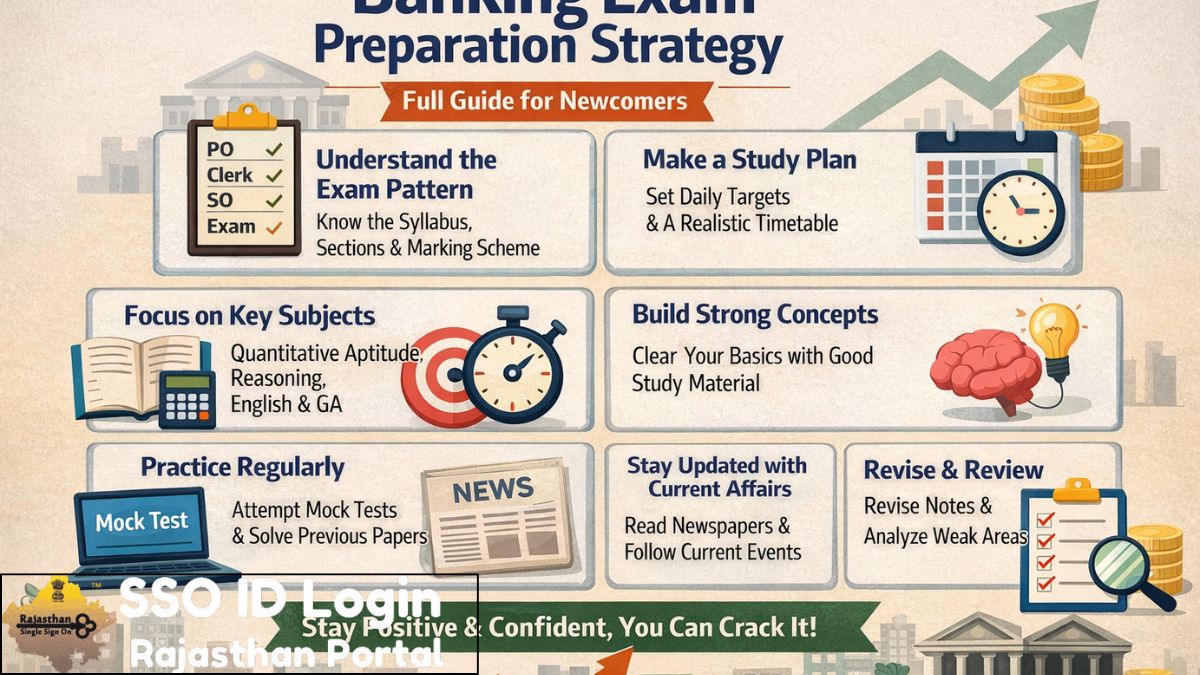
Prior to commencing preparation, the candidates need to learn the pattern of the exam. Banking exams are normally conducted in three phases; Preliminary exam, Main exam and Interview. The stages assess various aptitudes. The initial test consists of reasoning, quantitative aptitude and English tests. The primary examination has other subjects like general awareness and knowledge of computers. In the meantime, the interview phase tests communications abilities and personality. Knowing how the exam is structured will enable the candidates to know how to prepare.
Being familiar with the Banking Exam Syllabus
Banking exams include various topics in the syllabus. Logical reasoning to puzzles, seating arrangement and questions of logical reasoning. Quantitative aptitude covers the arithmetic areas like percentages, ratio, and data interpretation. The English language has grammar, vocabulary and reading comprehension. General awareness consists of banking and current affairs. In the meantime, candidates need to concentrate in learning ideas rather than remembering formulas.
Developing an Efficient Study Plan
An effective plan of study is a prerequisite to success The applicants are expected to break a day into studying various subjects. As an illustration, theory may be employed in the morning and practice in the evening. In the meantime, regular revision is to be in the schedule. A regular study plan makes productivity and efficiency better. Focusing on Concept Clarity
Banking exams are highly concerned with concept clarity
Before answering questions, the candidates are expected to master the basics first. Firm fundamentals make candidates find it easy to solve tricky problems. In the meantime, updating ideas on a regular basis enhances retention. Good comprehension minimizes errors in exams. Doing Mock Tests on a regular basis. Mock tests are significant in preparation. They also assist the candidates in knowing how the exams will be conducted and the time constraints.
In the meantime, the mock tests enhance speed and accuracy
The candidates are expected to review their performance in every test. This assists in recognition of the weak areas and enhance strategy. Improving Time Management During exams time management is very important. The candidates have to be trained to answer questions in a short period.
Doing timed tests can be used to work on speed.
In the meantime, it is possible to get on the easy questions first, and this can be done to make an overall score higher. Time management is effective and enhances performance. Strengthening Weak Areas
Each candidate has areas of weaknesses
Determining weak areas will enable the candidates know on what they need to improve on. The applicants are supposed to devote more time to problematic issues. In the meantime, practicing frequently, can mean to reinforce weak points. Weaknesses should be improved to add to total score.
Keeping up with the current affairs
Banking exams are significant in current affairs. The applicants are expected to read newspapers everyday. In the meantime, after monthly updates of current affairs, it can be useful. Increasing the awareness in banking enhances the general section of awareness. Frequent revision will mean retention.
Applying the Right Study Material
It is essential to select the appropriate material of the study. Applicants ought to go through reliable books and online sources. In the meantime, keeping to a limited number of sources helps to stay on track. After searching through a few good sources, it enhances knowledge. To be successful, the material of a study should be consistent. Maintaining Consistency
The secret of passing banking exams is consistency
Students are not supposed to take a long break in between their studies. In the meantime, small goals contribute to the continuation of progress. Confidence and performance is enhanced with practice. There is success through a consistent effort.
Avoiding Common Mistakes
There are numerous mistakes that are committed by a candidate during preparation. Other candidates do not revise and this impacts on retention. Others do not pay attention to mock tests; this discourages exam confidence. In the meantime, lack of due preparation results in unfinished preparation. Unless students are disciplined, have a structured study plan and evaluate their progress regularly, they are likely to stand a bigger chance of success. Making timely corrections and learning through the mistakes is one of the most important in getting better results in the competitive examinations.
Conclusion
India offers good career after banking examination. Despite the intensity of competition, the right strategy and preparation can aid the success of the candidates. Candidates can manage performance by learning the pattern of the exam, practicing, and time management. In the meantime, consistency and focus are necessary to enjoy long-term success. Having a proper and well-planned preparation plan, students have good chances to pass banking examinations and have successful careers in the banking business. With an appropriate strategy, the candidates are able to concentrate on the major topics like quantitative aptitude, reasoning skill, English language and general awareness in a systematic order. Performance can be significantly enhanced by establishing a daily study schedule, rehearsing on the various exams and revising. Knowing the pattern in exam and practicing in areas of weakness also makes the candidate more accurate and confidence-based over time.